This post answers the question “How long do dental implants last?” and explains what determines an implant lifetime. You’ll learn the difference between the implant fixture and the crown, the factors that shorten or extend implant lifetime, everyday care tips, warning signs of trouble, and where to get dental implants evaluation and maintenance near Leeds, Alabama. You'll also learn about replacing missing teeth with this solution.
What "Implant Lifetime" Means — Implant Lifetime In Leeds, Alabama
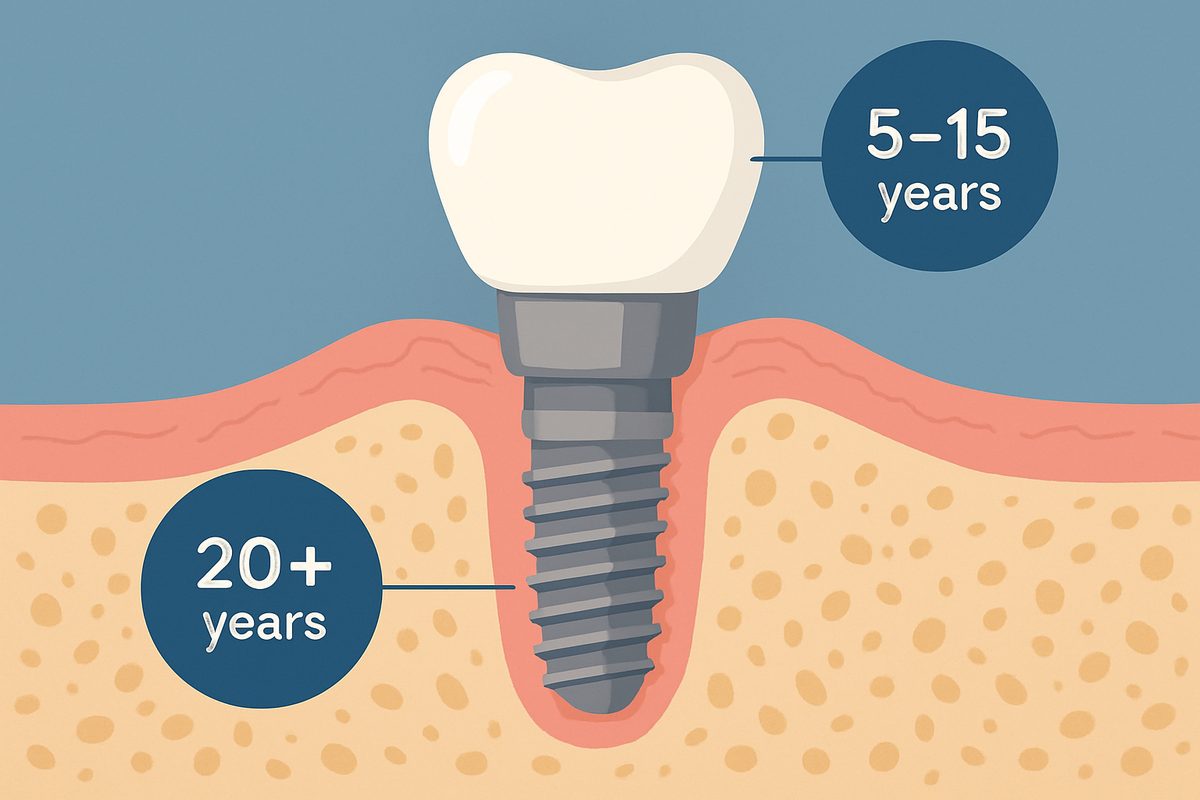
“Implant lifetime” refers to how long the titanium fixture (the part placed in the jaw) and the attached restoration last. The fixture and the crown or denture have different lifespans. With good care, many implant fixtures last 15–30+ years, and some last a lifetime. Crowns, bridges, and removable restorations usually need replacement sooner — often every 8–15 years depending on wear and materials.
When discussing implant lifetime in Leeds, Alabama, remember that local follow-up care and professional maintenance strongly influence outcomes. Regular checkups at a nearby practice help catch problems early and protect long-term success.
Key Factors That Affect Your Implant Lifetime
Oral Hygiene And Gum Health
Poor oral hygiene allows plaque to build up around implants. That can cause peri-implant mucositis (gum inflammation) and peri-implantitis (bone loss and infection). Both conditions shorten implant lifetime. Daily cleaning and professional cleanings are essential to prevent these problems.
Bone Quality And Healing
Strong bone and good healing are critical to long-term stability. Low bone volume or poor bone quality can raise the risk of implant failure unless bone grafting or other procedures are used. Smoking slows healing and increases the chance of implant complications, reducing implant lifetime.
Surgical Planning And Implant System
Precise placement and the right implant system improve long-term outcomes. Digital planning, CBCT imaging, and guided surgery reduce stress on the implant and surrounding bone. High-quality implant materials and proven systems tend to last longer.
Restoration Type And Materials
The type of restoration affects expected lifetime. Single crowns may need replacement more often than well-maintained implant fixtures. Bridges and All‑on‑4 full‑arch restorations distribute forces differently; with proper design and maintenance, they can last many years but may require periodic prosthetic work.
Medical Conditions And Habits
Health and habits influence implant lifetime. Poorly controlled diabetes, certain osteoporosis medications, heavy bruxism (teeth grinding), and tobacco use raise the risk of complications. Managing health issues and using protective measures like night guards can extend implant lifetime.
Daily Care And Professional Steps To Extend Implant Lifetime Near Leeds, Alabama
Everyday care and regular dental visits help maximize implant lifetime near Leeds, Alabama. Follow a consistent routine and keep professional appointments.
- Daily cleaning: brush twice, floss or use interdental brushes, and consider an antimicrobial rinse.
- Professional maintenance: dental cleanings, exams, and periodic X-rays to monitor bone levels and detect early issues.
- Protective measures: use a night guard for bruxism, stop smoking, and review medications that may affect healing with your dentist.
Signs An Implant Is Failing — When To Seek Care
Watch for these warning signs and contact your dentist promptly if you notice them:
- Pain or persistent swelling around the implant
- Mobility of the implant or restoration
- Continuous bleeding or pus around the gum
- Receding gums or gaps where food catches
At an exam your dentist will check probing depths, look for inflammation, and take X-rays to assess bone levels. Early treatment of infection or bone loss can often save the implant, so do not delay.
How Dental Implants Compare To Bridges And Dentures — Realistic Expectations For Implant Lifetime In Leeds, Alabama
Implant fixtures often outlast bridges and dentures. Typical lifespans:
- Implant fixture: 15–30+ years, sometimes a lifetime with proper care
- Crowns on implants: commonly 8–15 years depending on material and wear
- Bridges: 7–15 years before replacement or major repair
- Dentures: 5–10 years for fit changes and relines, though the prosthesis itself may be replaced sooner
Cost vs. longevity trade-offs matter. Implants usually cost more up-front but can offer better function and longer service. Repairs or replacements are more likely with bridges and dentures. Your dentist in Leeds, Alabama can help weigh options based on bone, budget, and lifestyle.
Why Choose Koplon Implant & Family Dentistry To Help Maximize Your Implant Lifetime
Koplon Implant & Family Dentistry in Leeds, Alabama offers an experienced implant team (Dr. Scott and Dr. Adam Koplon) and technology that supports longer implant lifetime. Key advantages:
- In-house digital dental lab and CEREC same-day crowns for precise restorations
- Advanced implant systems and All‑on‑4 expertise
- Digital imaging and guided planning to improve placement accuracy
- Laser periodontal therapy and sedation options for comfortable treatment
These tools and experience help reduce complications, improve fit, and make maintenance easier — all of which support a longer implant lifetime in Leeds, Alabama.
Next Steps: Getting An Implant Evaluation In Leeds, Alabama
To schedule an evaluation, bring any prior dental records, a list of medications, and information about medical conditions. Typical diagnostics include a clinical exam, digital X-rays or CBCT scans, and a review of restorations and bite. The team will assess bone, gum health, and overall risk to estimate your implant lifetime.
If you’re considering implants or worried about an existing implant, call Koplon Implant & Family Dentistry to schedule an exam. Early evaluation and regular maintenance are the best ways to protect implant lifetime.