Denture implants are dental implants used to anchor dentures to the jawbone for better fit, function, and comfort. Many patients ask about denture implants because traditional dentures can slip, cause sore spots, and limit what you can eat. This post explains types of denture implants, the step-by-step procedure, typical costs, who benefits most, and questions to ask your implant dentist. By the end you'll know how denture implants work and whether denture implants in Leeds, Alabama might be right for you.
What Are Denture Implants?
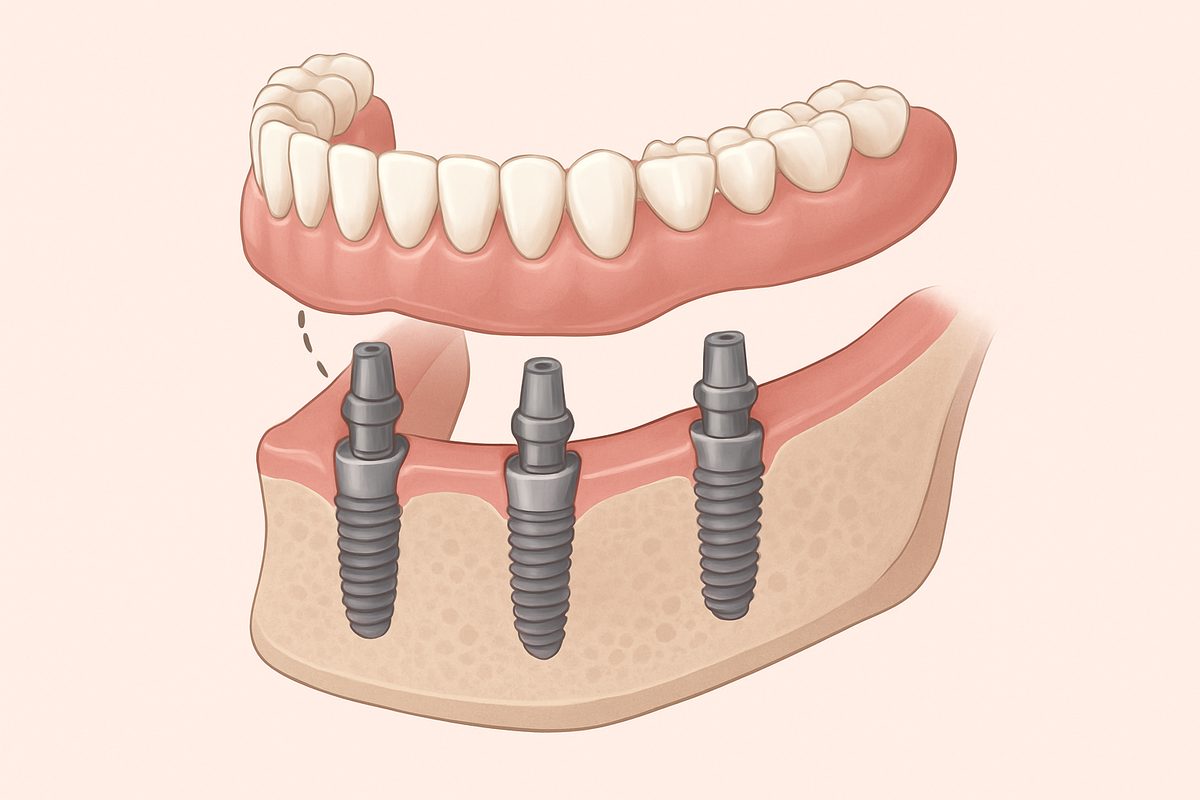
Denture implants are small titanium posts placed into the jaw that act like tooth roots. An implant-supported denture uses those implants plus attachments to hold a denture in place. Compared with traditional dentures, denture implants offer much more stability, better chewing power, and a more natural feel. When people talk about denture implants in Leeds, Alabama, they usually mean either removable overdentures that snap on or fixed prostheses that act like permanent teeth.
Types Of Denture Implants (and how they differ)
Implant-Retained Overdentures
Implant-retained overdentures use two or more implants with attachments that let a removable denture snap firmly into place. Pros include easier cleaning, lower cost than fixed options, and improved stability over regular dentures. Cons include some movement compared with fixed bridges and the need to remove the denture for cleaning and periodic clip replacement.
Fixed Implant-Supported Dentures (All-on-4 / full mouth dental implants)
Fixed implant-supported dentures use multiple implants to support a permanent bridge. The All-on-4 approach places four implants to hold an entire arch. These full mouth dental implants are not removable by the patient and feel closest to natural teeth. They’re recommended when someone wants a long-term, highly functional solution and when bone and health conditions allow for implant surgery.
Single Implant Attachments for Partial Dentures
A single implant can stabilize a partial denture or replace a lone missing tooth. This option is less invasive and cheaper than full-arch solutions but offers less overall bite strength than multiple-implant systems.
How Denture Implants Work: Step-by-Step Procedure
Initial exam and planning
Your dentist will take digital images and scans to assess bone quantity and quality. A treatment plan shows where implants will go, whether bone grafting is needed, and the type of denture or bridge planned. Good planning helps avoid surprises and improves outcomes for denture implants in Leeds, Alabama.
Surgery: implant placement
The implants are placed in the jaw during a minor surgical procedure. Sedation options vary from local anesthesia to DOCS-certified oral conscious sedation for anxious patients. Placement usually takes one to a few hours depending on the number of implants.
Healing and osseointegration
Over several weeks to months the bone fuses to the implants in a process called osseointegration. During healing you may wear a temporary denture. Proper healing is key for long-term success of denture implants.
Connecting the denture and final restorations
Once implants are stable, your dentist will connect attachments or place the final fixed bridge. Some practices offer same-day provisional teeth or immediate-load options in specific cases, while others complete final restorations after full healing.
Cost Breakdown: Denture Implants in Leeds, Alabama
Costs vary widely based on:
- Number of implants needed
- Removable overdenture vs fixed full-arch restoration
- Need for bone grafting or extractions
- Materials and lab work
- Use of advanced imaging and same-day restorations
Typical ranges: implant-retained overdentures can range from lower-cost options with two implants to higher-cost versions with four or more. Fixed full-arch solutions like All-on-4/full mouth dental implants often cost more due to additional implants, lab work, and materials. Prices vary; ask for itemized estimates, check what insurance may cover, and consider financing. Cheaper options may cost less up front but could raise long-term expenses if parts wear out or poorly fit.
Benefits, Risks, And Maintenance
Benefits of denture implants in Leeds, Alabama include better chewing, clearer speech, jawbone preservation, and improved confidence. Risks include typical surgical risks (infection, bleeding), possible implant failure, and the need for additional procedures like grafts. Proper care helps implants last many years:
- Daily brushing and cleaning around attachments
- Regular dental checkups and professional cleanings
- Promptly addressing loose attachments or worn parts
Who Is A Good Candidate For Denture Implants?
Good candidates include people unhappy with traditional dentures, those with enough bone (or willing to have grafting), and patients in good overall health. Smoking, uncontrolled medical conditions, or severe bone loss may require extra care or alternative treatments. A personalized consultation and imaging determine candidacy for denture implants in Leeds, Alabama.
Questions To Ask Your Implant Dentist
- How many denture implants or All-on-4/full mouth dental implants cases have you placed?
- What are your complication and success rates?
- Do you offer sedation and what types?
- Is there an in-house lab or do you work with outside labs?
- What is the estimated timeline from start to finish?
- Can you provide an itemized estimate and financing options?
- What warranties or follow-up services do you offer?
Looking For Denture Implants In Leeds, Alabama?
Koplon Implant & Family Dentistry offers experience with All-on-4 and a full range of denture implant solutions. The father-and-son team provides in-house digital lab work, DOCS-certified sedation, and advanced diagnostic tools to plan predictable outcomes. Their combined credentials and same-day technology help streamline treatment from implant placement to final restoration.
To schedule a consultation or request an estimate for denture implants in Leeds, Alabama, contact Koplon Implant & Family Dentistry for a personalized treatment plan and pricing details.