The anchoring of a crown bridge or denture means how a replacement tooth or set of teeth is held in place. Patients weighing options read this to understand the difference between removable plates, tooth-supported restorations, and implants. This article will explain common anchoring methods, pros and cons, who is a good candidate, what to expect during treatment, and a simple checklist to help you decide if the anchoring of a crown bridge or denture in Leeds, Alabama is right for you.
What is the anchoring of a crown, bridge or denture?
Anchoring refers to the way a dental restoration stays stable in your mouth. Some restorations are cemented or screwed to natural teeth. Others are attached to implant posts—titanium roots placed into the jawbone. For dentures, anchoring can mean special attachments that clip to teeth or implants. Note the difference between supporting (an implant or healthy tooth that bears the load) and retaining (clips, cement, or screws that keep the restoration in place).
Common anchoring methods
Traditional tooth-supported (cemented or screw-retained) crowns and bridges
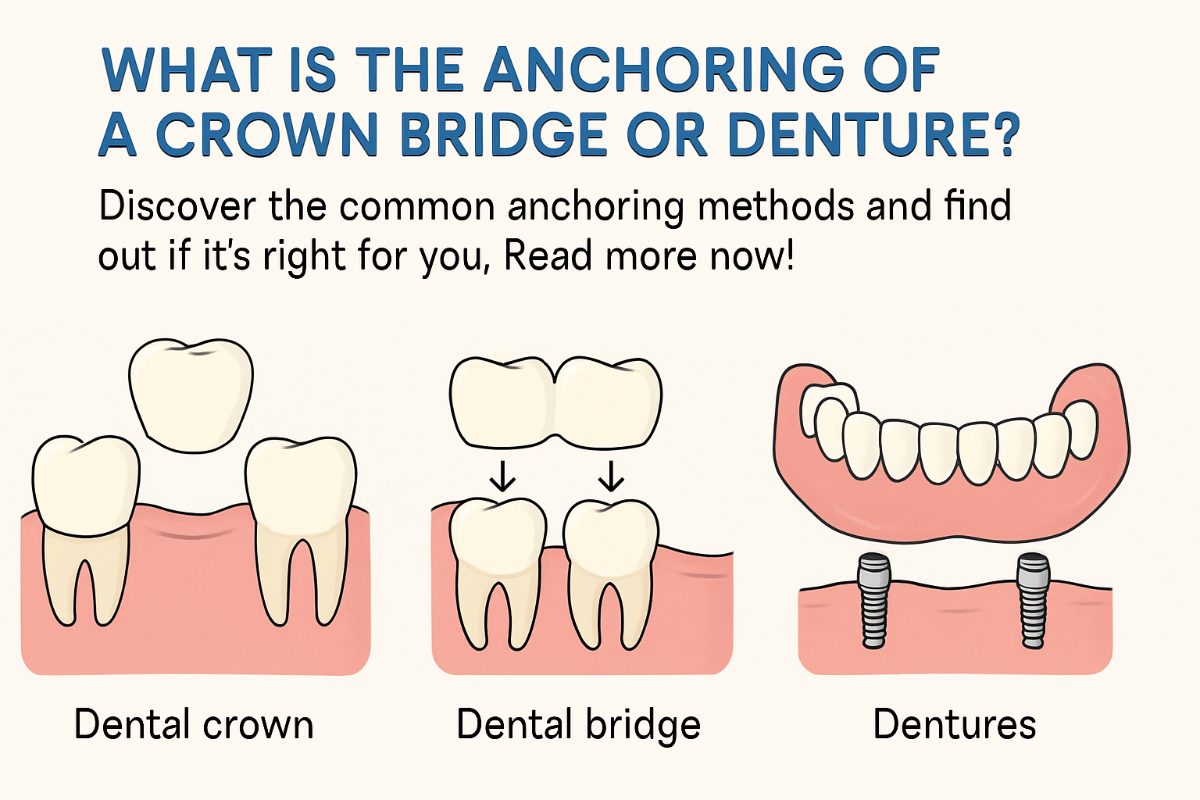
If nearby teeth are healthy, a crown or bridge can be anchored to them. A crown caps a damaged tooth, while a bridge uses crowns on adjacent teeth to support one or more false teeth. These are usually cemented, though some bridges or crowns can be screw-retained for easier removal by your dentist.
Implant-supported crowns and bridges
Implants act like artificial roots. One implant can hold a single crown. Multiple implants can anchor a multi-tooth bridge without relying on other teeth. Implant-supported restorations are more stable and can protect nearby teeth from extra stress.
Implant-retained dentures and All-on-4
Overdentures snap onto implants for better fit and chewing. Full-arch solutions like All-on-4 use four or more implants to support a complete fixed bridge. These options give denture wearers improved comfort and confidence compared with traditional removable dentures.
Benefits of the anchoring of a crown bridge or denture
Anchored restorations improve chewing, speech, and comfort. Implant anchoring helps preserve jawbone by stimulating bone like natural tooth roots. Stability from implants or well-anchored bridges reduces slipping and sore spots common with removable dentures. Many patients find anchored options look and feel more like real teeth.
Downsides and trade-offs
Treatment time and cost
Implants and fixed solutions usually cost more up front and may take several months to complete because of healing time. Tooth-supported crowns and bridges are often faster and less expensive initially but may affect neighboring teeth.
Surgical risks and maintenance
Implant placement is surgery and carries risks such as infection or implant failure, though these are uncommon with proper care. All anchoring methods require good hygiene and occasional maintenance—re-cementing crowns, replacing worn attachments, or repairing broken parts.
Who is a good candidate?
Oral health and bone requirements
Good gum health and enough jawbone are important for implants. If bone is thin from long-term tooth loss, grafting may be needed before implant anchoring. Tooth-supported bridges require strong adjacent teeth to be prepared for crowns.
Medical and lifestyle factors
Medical conditions like uncontrolled diabetes, heavy smoking, or certain medications can affect healing and implant success. Discuss your full medical history with your dentist when considering anchoring options.
Patient goals and budget
Decide what matters most: permanence, speed, or cost. If you want a long-term solution and can invest in it, implant anchoring often wins. If you need a quicker, less costly fix, tooth-supported crowns or removable dentures might be preferable.
What to expect during evaluation and treatment
Digital imaging and treatment planning
Your dentist will use x-rays and 3D scans to evaluate bone, nerves, and tooth position. Digital planning helps place implants precisely and design crowns, bridges, or dentures that fit well.
Surgical and restorative steps
Implant placement involves inserting posts into the jaw and allowing time to heal and integrate with bone. After healing, an abutment and crown or bridge are attached. For All-on-4, surgery and placement may be combined with a temporary fixed arch for faster function.
Recovery and home care
Expect a few days of soreness after surgery and follow-up checkups. Daily brushing, flossing, and special cleaning tools for implants or under-bridge areas are essential to protect anchors and surrounding tissue. Learn more about home care.
Risks, lifespan, and long-term care
Crowns and bridges typically last 10–15 years or longer with proper care. Implants can last decades but need regular hygiene and periodic checks. Watch for signs of trouble: pain, looseness, swelling, or gum recession. Timely repair and routine maintenance extend the life of anchored restorations.
How to decide: a quick checklist
- Do you have enough bone, or are you willing to have grafting? - How soon do you need functional teeth? - What is your budget for initial treatment and long-term care? - Do you prefer a fixed (permanent) solution or a removable one? - Do you have medical or lifestyle factors that affect healing? Use these answers to match your priorities to the right anchoring method.
About Koplon Implant & Family Dentistry
Koplon Implant & Family Dentistry offers implant and restorative care with an in-house digital lab and CEREC same-day crown technology. The Koplon team has deep experience with All-on-4 and advanced implant procedures, and they provide sedation options for comfort. If you’re considering the anchoring of a crown bridge or denture in Leeds, Alabama, their combined surgical and restorative approach can streamline care under one roof.
If you’re ready to schedule a consultation to learn whether the anchoring of a crown bridge or denture in Leeds, Alabama is right for you, bring your medical history and any questions about cost, timeline, and expected outcomes. A personalized exam and digital imaging will help your dentist recommend the best anchored solution for your needs.