If you’re worried about tooth loss and want to know whether dental implants are right for you, this guide is for patients seeking clear, practical answers. You’ll learn why tooth loss happens, how it affects health and daily life, what an implant dentist does, how dental implants work, and next steps for evaluating treatment.
Why tooth loss happens: common causes
- Tooth decay (untreated cavities)
- Gum disease (periodontitis)
- Trauma or injury to the mouth
- Genetics or developmental problems
- Age-related wear and tear
- Failed root canals or previous dental work
Prevention means regular checkups, good brushing and flossing, treating gum disease early, and protecting teeth during sports. Early detection can stop problems before tooth loss occurs.
How tooth loss affects your health and daily life
Missing teeth do more than change your smile. Tooth loss can lead to jawbone loss, shifting of nearby teeth, bite changes, trouble chewing, and even speech problems. These issues can affect nutrition and overall health. Untreated tooth loss in Leeds, Alabama can worsen over time, making later treatment more complex.
What is an implant dentist?
An implant dentist specializes in replacing missing teeth with dental implants. They typically train beyond dental school with courses in implant surgery, restoration, and advanced imaging. Some hold certifications in implant systems, bone grafting, and full-arch techniques. While general dentists can place and restore simple implants, implant specialists focus on planning complex cases, surgical placement, and the final restoration to make sure implants function and look like natural teeth.
How dental implants treat tooth loss: step-by-step
Implant components and types
Dental implants use three main parts: the implant post (titanium screw placed in bone), the abutment (connector), and the crown or prosthesis (the visible tooth). Options include single-tooth implants, implant-supported bridges for several missing teeth, and All-on-4 full-arch solutions that replace a whole arch with a few implants.
The treatment timeline
Typical phases:
- Consultation and imaging (digital x-rays or CBCT)
- Surgical placement of the implant post
- Healing and osseointegration (bone fuses to the implant)
- Restorative phase: abutment and crown or prosthesis placement
Some patients need bone grafts or sinus lifts first. Candidacy depends on bone health, overall health, and smoking status. Many practices now use guided surgery and same-day provisional teeth to speed recovery.
Comparing options for replacing tooth loss
Quick pros and cons:
- Dental implants — pros: long-lasting, protect bone, feel natural; cons: higher upfront cost, require surgery.
- Fixed bridges — pros: no surgery in some cases, faster; cons: need to alter adjacent teeth, may not stop bone loss.
- Removable dentures — pros: lower cost, non-surgical; cons: less stable, may need relines, can speed bone loss.
- Resin-bonded partials — pros: conservative; cons: less durable, limited use.
Implants are often the best long-term solution for single or multiple missing teeth, while bridges or dentures can be appropriate when surgery isn’t possible or cost is a limiting factor.
What to expect when seeing an implant dentist about tooth loss in Leeds, Alabama
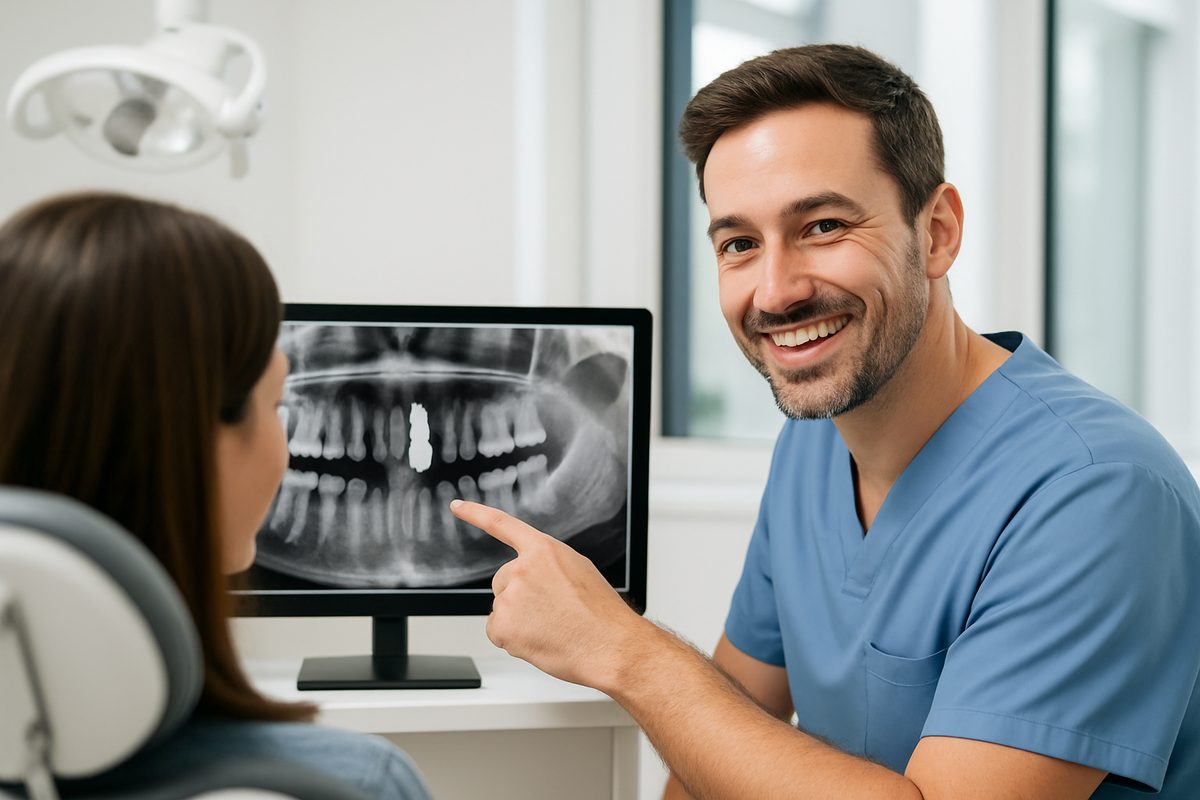
Your first visit usually includes a dental exam, medical history review, and digital imaging such as CBCT or intraoral scans. The implant dentist will explain treatment options, timeline, and give a cost estimate. Many practices now offer digital planning, guided surgery, and same-day provisional teeth to streamline care.
For example, Koplon Implant & Family Dentistry uses an in-house digital dental lab and CEREC same-day crowns, plus sedation options and experience with All-on-4 full-arch restorations to make treatment more efficient and comfortable.
Questions to ask an implant dentist about dental implants and your tooth loss
- How many implant cases have you placed and restored?
- What are your success and complication rates?
- Which implant system do you use and why?
- Who performs the surgery and who does the restoration?
- What is the expected timeline for my case?
- Do I need bone grafting or other preparatory surgery?
- What are the risks and how are complications handled?
- What are the costs, insurance coverage, and financing options?
Cost, financing, and next steps for tooth loss in Leeds, AL
Cost depends on the number of implants, type of restoration, need for grafting, and technology used. Insurance may cover parts of the restorative work but often not the implant body. Common financing options include payment plans, dental loans, and third-party financing. The best next step is a personalized evaluation to get a precise plan and estimate.
Tooth loss can be treated predictably with modern dental implants, and many patients regain full function and confidence. If you’re facing tooth loss in Leeds, Alabama, consider scheduling a consultation to review your options and get a tailored plan for dental implants at Koplon Implant & Family Dentistry.