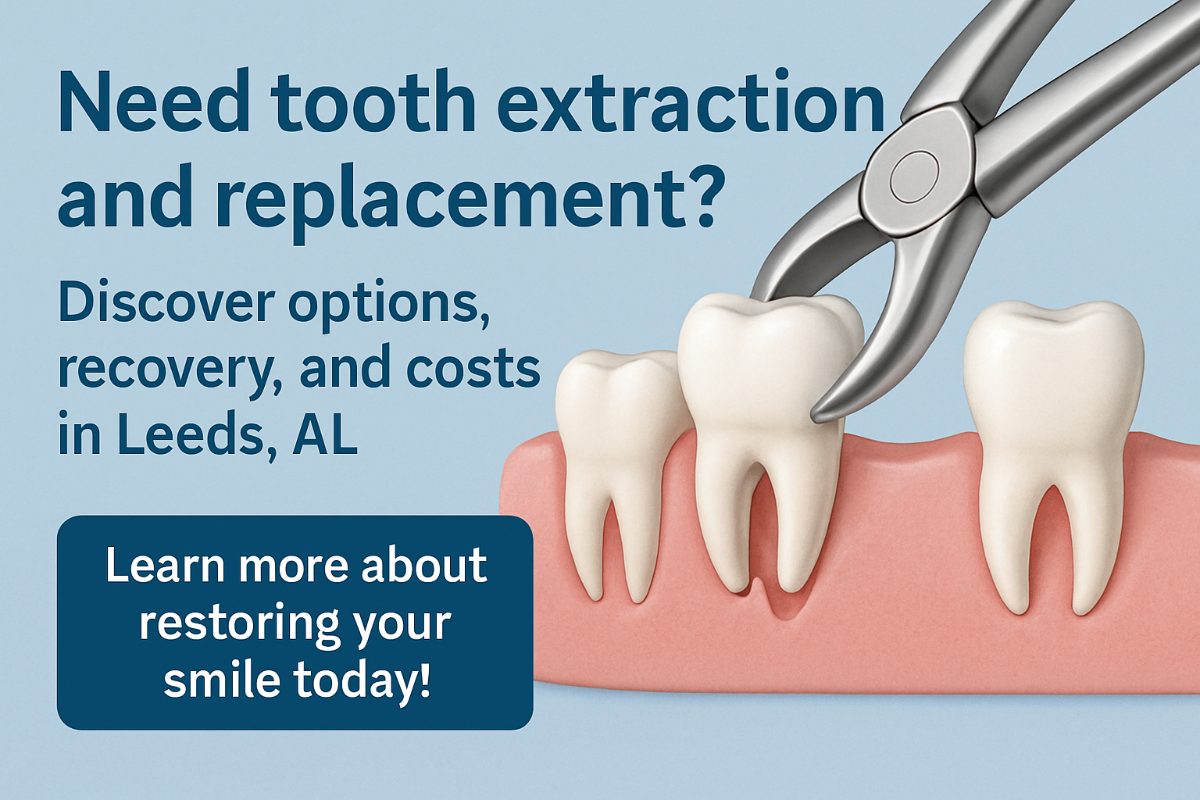
Tooth extraction is the removal of a damaged or problem tooth. Many people face decisions about tooth replacement after extraction to keep chewing, speaking, and smiling normally. This article explains common reasons for a tooth extraction, what to expect during the procedure, short- and long-term tooth replacement options, and how to choose the right path for you in Leeds, Alabama.
Why You Might Need A Tooth Extraction
Some teeth cannot be saved or cause problems that make removal the best choice. Common reasons for a tooth extraction include:
- Severe decay that destroys most of the tooth structure
- Infection or abscess that won’t heal with root canal therapy
- Advanced periodontal (gum) disease with bone loss
- Overcrowding before orthodontic treatment
- Trauma or a tooth fractured below the gum line
Extraction is often preferred when a tooth is unrestorable, a previous root canal has failed repeatedly, or the tooth poses a risk to nearby teeth. Watch for red flags and see a dentist soon: severe pain, swelling, fever, pus, or loose teeth.
What Happens During A Tooth Extraction In Leeds, Alabama
Simple Vs. Surgical Extraction
A simple extraction removes a visible tooth with forceps. Chair time is usually 20–40 minutes. A surgical extraction is used when the tooth is broken, impacted, or below the gum line. It may require small incisions, bone removal, or sectioning the tooth, and can take 45–90 minutes depending on complexity.
Pain Control And Sedation Options
Local anesthetic numbs the area so you feel little to no pain during a tooth extraction in Leeds, Alabama. For anxious patients or complex surgeries, options include oral sedation or IV/conscious sedation. Sedation reduces anxiety and awareness but still allows the dentist to monitor you. Your dentist will review what to expect, recovery time, and whether someone should drive you home.
Risks And How They’re Managed
Common risks after extraction include bleeding, dry socket (when the clot is lost), infection, and rare nerve irritation. Dentists manage these risks by:
- Giving clear aftercare instructions to limit bleeding
- Using proper surgical technique and antibiotics when needed
- Advising on smoking avoidance and medication that affect healing
- Monitoring nerve-related signs and offering follow-up care
Immediate And Short-Term Tooth Replacement Options After Tooth Extraction Near Leeds, Alabama
Replacing a visible tooth quickly can help appearance and function while you heal. Common short-term options include:
- Removable partial denture or “flipper” — quick, low-cost temporary tooth
- Provisional crown — a temporary crown placed on an implant or adjacent teeth
- Temporary bridge or resin-bonded (Maryland) bridge — used when adjacent teeth are healthy
Immediate implant placement (placing an implant at the same visit as the extraction) can reduce treatment time, but it’s not always possible if infection or bone loss is present. Delayed implants allow healing first and can give a better long-term result. Discuss timing and esthetic goals with your dentist, since healing time before a permanent restoration often ranges from a few weeks to several months.
Long-Term Tooth Replacement Choices: Implants, Bridges, And Dentures
Long-term options restore function, appearance, and oral health. Main choices include:
- Single-Tooth Implant and Crown: A titanium implant replaces the root and supports a crown. High success and longevity with normal care.
- Implant-Supported Bridge and Full-Arch Solutions (including All-on-4) for people missing several teeth.
- Traditional Fixed Bridges: Use crowns on adjacent teeth to support a false tooth; faster than implants but may affect neighboring teeth.
- Removable Dentures: More affordable option for multiple missing teeth, though less stable than implants.
Choice depends on bone quality, medical history, budget, and esthetic goals. Implants often offer the best long-term function and bone preservation, while bridges or dentures may suit short-term budgets or medical limitations.
How To Choose The Right Option After A Tooth Extraction In Leeds, Alabama
Talk with your dentist about factors that affect treatment choice:
- Bone quality and whether grafting is needed
- Overall health, medications, and smoking status
- Timeline for treatment and how quickly you want a permanent tooth
- Insurance coverage and financing options
Useful questions to ask at your consultation: What are your experience and success rates with implants? What are the alternatives? How long will healing take? What sedation options do you offer? Modern tools like digital imaging and an in-house lab speed planning and improve fit, often reducing appointments and surprises.
About Koplon Implant & Family Dentistry: Tooth Extraction And Tooth Replacement By Leeds, Alabama
Koplon Implant & Family Dentistry is a family-run practice in Leeds, Alabama offering coordinated care from extraction through final restoration. The team combines decades of implant experience, All-on-4 expertise, and an in-house digital dental lab for precise, efficient restorations. They also offer CEREC same-day crowns and DOCS-certified sedation for comfortable care.
At Koplon, patients can expect surgical and restorative planning under one roof, clear communication about timing and costs, and options tailored to health and esthetic goals. If you’re weighing a tooth extraction in Leeds, Alabama and want to review tooth replacement choices, schedule a consultation to discuss implants, bridges, dentures, and short-term solutions for immediate needs.