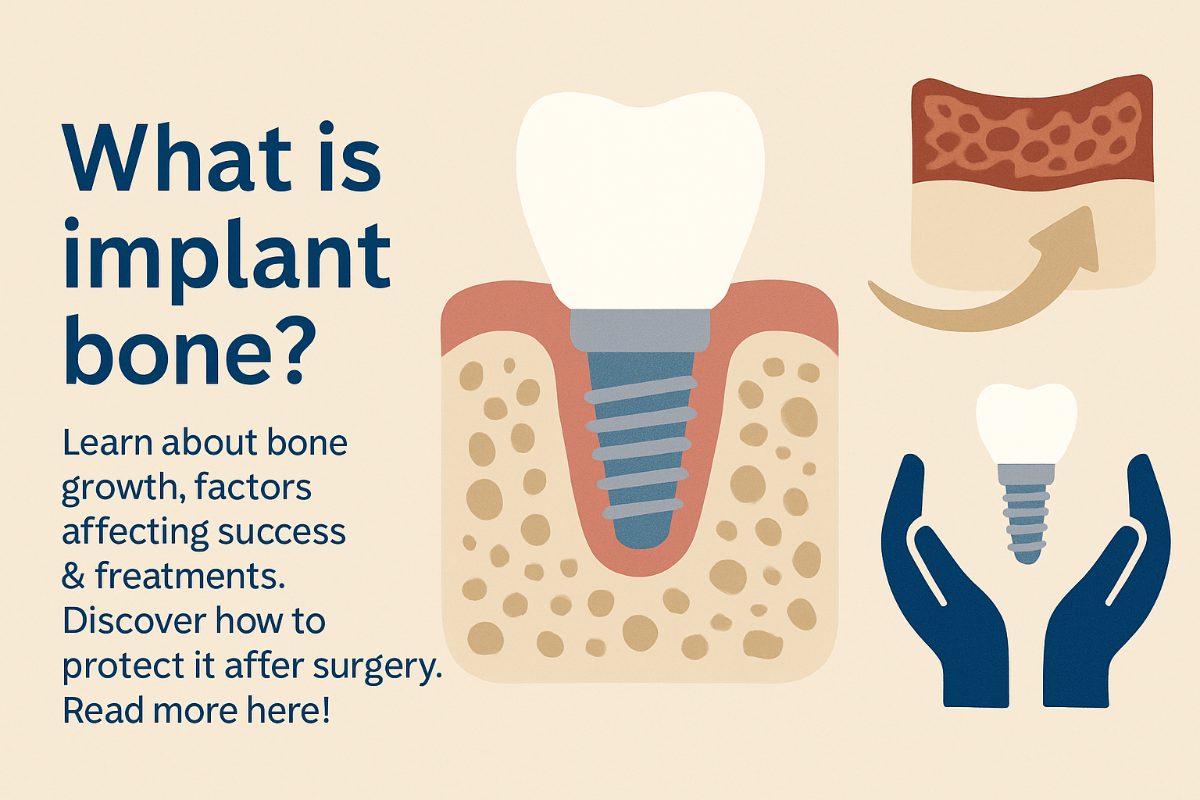
Implant bone is the jawbone that grows around and supports a dental implant. Good bone growth — called osseointegration — is the foundation of a stable, long-lasting implant. This post explains what implant bone means, how bone growth works, common causes of poor bone, treatments to build or preserve bone, basic aftercare, and how to find help. If you live near Leeds, AL and are worried about implant bone, this guide will help you know what to ask and what to expect.
What "implant bone" means
Implant bone refers to the jawbone that must fuse tightly to a titanium or ceramic implant. Osseointegration is the process where bone cells attach directly to the implant surface. Good bone quality (density) and quantity (volume) give the implant stability and reduce the chance of loosening or failure over time.
How implant bone growth works
Healing stages after implant placement
Right after surgery you have initial mechanical stability from the implant fitting into the bone. Over the next weeks and months the body remodels bone around the implant. Typical stages:
- First 1–2 weeks: soft tissue healing and early bone response.
- 4–12 weeks: new bone forms and begins to attach to the implant.
- 3–6 months: many patients reach full integration, though timing varies.
Biology behind bone growth
Bone growth relies on cells called osteoblasts (build bone) and osteoclasts (resorb bone). A healthy blood supply, stable implant surface, and controlled inflammation help osteoblasts lay down new bone on the implant. Factors like growth proteins and careful surgical technique support strong implant bone formation.
Key factors that affect implant bone success
Patient health and habits
Your overall health matters. Smoking, uncontrolled diabetes, certain medications, and poor nutrition can slow healing and weaken implant bone. Stopping smoking, managing blood sugar, and getting enough protein, calcium, and vitamin D improve odds of success.
Local oral factors
Bone volume and density at the implant site determine whether an implant is stable and how well implant bone will form. Gum disease, past infections, or long-term tooth loss that caused bone shrinkage can hurt outcomes unless addressed first.
Provider skill and planning
Good imaging (CBCT scans), careful surgical technique, and a clear plan protect and build implant bone. Proper placement reduces stress on the bone and helps tissue heal evenly around the implant.
Treatments to build or preserve implant bone
Bone grafting options
Bone grafts restore lost volume so implants can be placed or supported:
- Autograft — bone taken from the patient; best for integration but requires a second site.
- Allograft — human donor bone; commonly used and effective.
- Xenograft — animal-derived bone; often used as a scaffold for new bone.
- Synthetic — man-made materials that support bone growth.
Choice depends on how much bone is missing, patient preference, and the provider’s plan.
Other procedures
Sinus lifts raise the sinus floor to add bone for upper back implants. Ridge augmentation rebuilds a thin or collapsed jaw ridge. Guided bone regeneration uses membranes to help bone grow in a controlled way. Platelet-rich fibrin (PRF) or growth factors like BMP can speed healing and boost implant bone growth. If you have low jawbone density, these procedures are crucial.
Signs of healthy implant bone vs problems to watch for
Healthy implant bone shows a stable, pain-free implant and steady bone levels on X-rays. Warning signs include pain, swelling, implant mobility, persistent bleeding, or visible bone loss on radiographs. If any of these occur, call your dental team right away — prompt care can often save the implant.
How to protect implant bone after surgery
Follow your post-op instructions closely. Key steps:
- Keep the area clean with gentle rinses and careful brushing as advised.
- Start with soft foods and progress to normal chewing as your provider allows.
- Avoid smoking and follow medication directions, including antibiotics and pain control.
- Attend scheduled follow-ups and X-rays to track implant bone healing.
Choosing a provider for strong implant bone outcomes
Ask a dentist or oral surgeon about their experience with bone grafts, use of CBCT imaging, success rates, and follow-up care for implant bone. In Leeds, AL look for providers who offer both surgical and restorative care under one roof and who use modern imaging and lab technology to plan and monitor implant bone health.
When you meet a provider, ask: How many grafts and implants have you placed? What imaging will you use? How do you monitor bone healing? Clear answers help you choose a clinician who prioritizes strong implant bone outcomes. Read our patient reviews and learn about our practice.
If you live near Leeds, AL and have concerns about implant bone or need bone-building options, schedule a consultation to review imaging and treatment choices.
Quick FAQ
Q: How long does implant bone take to grow?
A: Typical integration is 3–6 months, but timing varies by site and patient health.
Q: Can everyone get a bone graft?
A: Most patients are candidates. Suitability depends on overall health, the amount of bone needed, and the treatment plan.
Q: Will smoking stop implant bone growth?
A: Smoking greatly increases risk and slows healing. Quitting improves the chance of successful implant bone formation.