If you’ve ever wondered, what is that implant, here’s a plain answer: a dental implant is an artificial tooth root (usually titanium or zirconia) placed into the jaw to hold a crown, bridge, or full-arch restoration. This guide will explain the main types, the step-by-step process, common risks, and practical next steps — including how to ask the right questions if you’re searching “what is that implant in Leeds.”
How Dental Implants Work — answering "what is that implant"
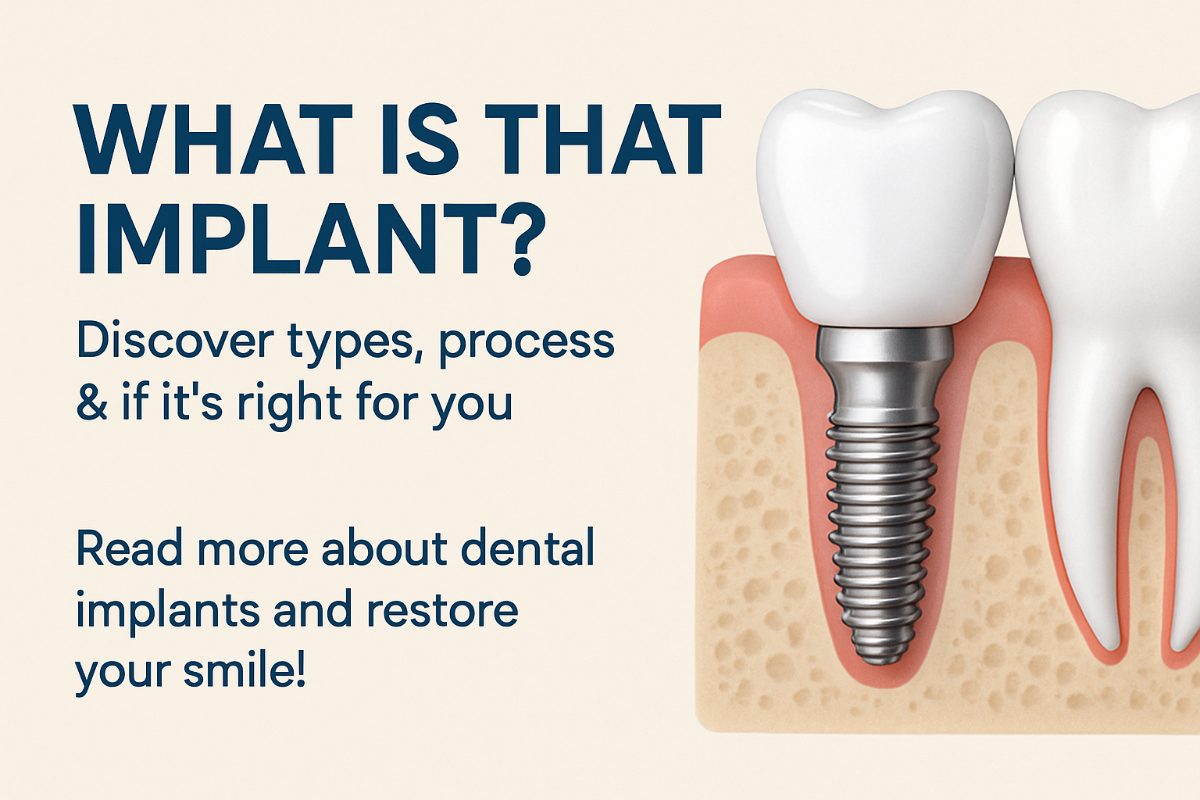
A dental implant is made of three parts: the implant post (the root), an abutment (the connector), and the crown (the visible tooth). Most posts are titanium or zirconia because those materials bond well with bone. That bonding process is called osseointegration — the bone grows tightly around the post, making the implant stable like a natural root.
When people ask “what is that implant in Leeds,” they usually mean this root-plus-crown system that restores chewing, speech, and appearance after tooth loss.
Common Types Of Implants
Single-tooth implant
A single-tooth implant replaces one missing tooth with one post and one crown. Timeline commonly spans a few months to allow healing and osseointegration. Compared with a bridge, an implant preserves neighboring teeth and bone, and usually lasts longer with proper care.
Implant-supported bridge
When multiple adjacent teeth are missing, two or more implants can support a bridge. This avoids using natural teeth as anchors and can be a stronger, longer-term solution than a traditional bridge.
All-on-4 / full-arch restorations
All-on-4 and other full-arch solutions use a small number of implants to support an entire upper or lower set of teeth. These fixed restorations suit people with complete tooth loss or failing teeth who want a stable, denture-like replacement. If you’re asking “what is that implant in Leeds” after seeing a full-arch prosthesis, this is likely it.
The Implant Treatment Process: Step-by-step
Consultation & planning
Your first visit includes a dental and health review, digital imaging (X-rays or CT scans), and a discussion of options. Providers map bone volume and nerve locations to plan implant sizes and positions.
Surgery & healing
During implant placement, the post is inserted into the jaw. Some patients receive a temporary tooth the same day; others wait for healing. Osseointegration usually takes several weeks to a few months — this is the critical phase when the implant fuses to bone for long-term stability.
Final restoration
After healing, the abutment and final crown, bridge, or fixed arch are attached. The result should look natural and restore normal chewing and speech. Final adjustments ensure comfort and bite alignment.
Who Is A Good Candidate — risks and things to consider
Good candidates are in generally good health with enough jawbone to support an implant. Factors that can affect success include smoking, uncontrolled diabetes, heavy alcohol use, and severe gum disease. When bone is low, bone grafts or sinus lifts may be recommended before or during implant treatment.
Possible complications are infection, implant failure, nerve injury, or sinus problems (for upper implants). Choosing a qualified team and following aftercare instructions lowers these risks.
Questions To Ask About Cost, Timeline, And Comfort
- What is the total cost, and what does it include (surgery, restoration, follow-ups)?
- Are financing or payment plans available?
- How many implants and visits will my case require?
- What experience do the surgeons have with this specific treatment?
- What sedation or comfort options do you offer?
- Is there a warranty or aftercare plan for restorations and implants?
About Koplon Implant & Family Dentistry — expert care for patients asking "what is that implant"
Koplon Implant & Family Dentistry in Leeds, Alabama, is a family-run practice that offers surgical and restorative care under one roof. Their in-house digital lab and CEREC same-day crown technology help speed treatment. The practice has deep experience with All-on-4 full-arch restorations, digital imaging, laser therapy, and sedation options for patient comfort.
Dr. Scott Koplon brings over 28 years of experience with advanced implant certifications and All-on-4 training. Dr. Adam Koplon adds modern training, implant externships, and DOCS-certified sedation. Together they combine hands-on experience with modern technology for predictable results.
Quick Takeaway & Next Steps
In short, if you’ve asked “what is that implant,” it’s a root-like post plus a connector and crown that replaces missing teeth and restores function and confidence. If you’re in Leeds and want a clear plan, book a consultation to review options, timing, and costs tailored to your mouth. A local implant exam will give you the personalized answers you need to move forward.