Deciding between full mouth dental implants in Leeds, Alabama and traditional dentures is a big choice for seniors, long-term denture wearers, or anyone with failing teeth. This guide explains the differences, benefits, candidacy factors, costs, and what to expect from the implant process so you can pick the option that fits your health, lifestyle, and budget.
Read on to learn how full mouth dental implants in Leeds, Alabama compare to dentures, who makes a good candidate, and how to start a consultation if you want to explore implant treatment.
How full mouth dental implants in Leeds, Alabama differ from dentures
What are full mouth dental implants?
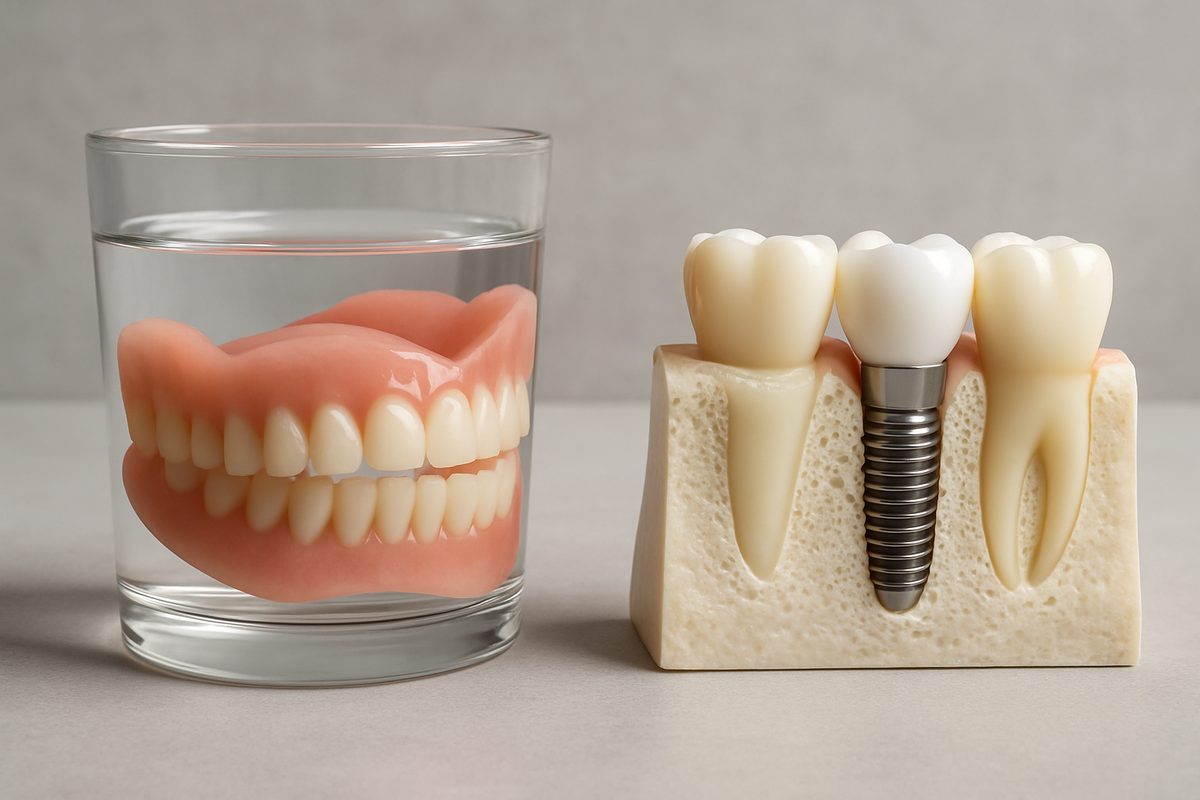
Full mouth dental implants in Leeds, Alabama replace an entire arch of teeth using dental implants and a fixed prosthesis. Options include implant-supported bridges and All‑on‑4 full-arch restorations. Instead of a removable plate, implants anchor a permanent set of teeth to the jawbone. This restores chewing, speech, and a natural look closer to real teeth.
What are dentures and implant‑retained dentures?
Dentures are removable artificial teeth that sit on the gums. Types include:
- Conventional full dentures — fully removable plates for a full arch.
- Overdentures — removable dentures that fit over remaining teeth or implants for added stability.
- Implant‑attached dentures — dentures that clip or screw onto implants for better retention but may still be removable for cleaning.
Conventional dentures are usually less expensive up front but can move, reduce bite force, and need regular relines. Implant‑retained options reduce movement but still differ from fixed implant restorations in feel and long‑term jaw support.
Key benefits of choosing full mouth dental implants in Leeds, Alabama
Improved chewing, speech, and comfort
Because implants fuse with bone, full mouth dental implants in Leeds, Alabama restore much more chewing power than dentures. That means a wider diet of foods and clearer speech. Fixed implant restorations feel more like natural teeth and don’t shift during talking or eating.
Bone preservation and facial support
Implants help preserve jaw bone by transmitting chewing forces to the bone. Dentures sit on top of the gums and contribute to bone loss over time, which can change facial appearance and cause dentures to fit worse. Choosing implants helps maintain facial structure and a more youthful profile.
Durability and long-term value
Implants are designed to last decades with proper care. Dentures typically need replacement or relining every 5–10 years. While implants cost more up front, they often offer better long-term value because of longevity and fewer replacements.
Who is a good candidate for full mouth dental implants in Leeds, Alabama?
Health and lifestyle factors
Good candidates are generally healthy enough for minor oral surgery. Controlled diabetes, non‑heavy smoking, and good oral hygiene improve success rates. Smoking and uncontrolled medical conditions raise risks and may affect healing.
Bone volume and preparatory treatments
Sufficient jaw bone is needed to secure implants. If bone is thin, bone grafting or sinus lifts may be required before implant placement. These preparatory procedures add time and cost but can make implant treatment possible for many patients.
When dentures may still be the better choice
Dentures might be recommended when medical issues prevent surgery, when bone quality won’t support implants even after grafting, or when budget constraints make implants impractical. In some cases, an implant‑retained denture offers a middle ground.
What to expect during the full mouth dental implants process in Leeds, Alabama
Consultation and digital planning
Your first visit includes a medical history review, oral exam, and digital imaging. Advanced practices use 3D scans to plan implant placement and decide between All‑on‑4, multiple individual implants, or hybrid options. Planning helps predict outcomes and timelines.
Surgery, temporary teeth, and healing timeline
During surgery, implants are placed into the jaw. Many patients receive immediate temporary teeth so they leave with a working smile. Osseointegration — the process where bone bonds to the implant — typically takes 3–6 months. Temporary restorations are replaced by final prostheses after healing.
Final restoration and aftercare
Once healed, the final prosthesis is attached. Follow‑up visits check fit and bite. Daily care includes brushing, flossing, and regular dental checkups. Some restorations may require professional maintenance like tightening or polishings over time.
Cost, insurance, and financing for full mouth dental implants in Leeds, Alabama vs dentures
What influences cost
Costs depend on the number of implants, need for bone grafting or extractions, choice of materials, lab work, and technology like guided surgery or an in‑house digital lab. All‑on‑4 often lowers the number of implants needed, which can reduce cost compared with placing many individual implants.
Insurance coverage and payment options
Dental insurance may cover parts of the treatment, such as extractions or lab fees, but often limits coverage for implants. Many offices offer financing plans, payment options, or phased treatment to spread cost. Compare upfront expense against lifetime costs of denture replacements and maintenance.
Choosing the right provider for full mouth dental implants in Leeds, Alabama
Look for clinicians with extensive implant experience, All‑on‑4 training, sedation options for comfort, digital planning tools, and access to an in‑house lab for precise restorations. Ask about case photos, patient outcomes, and team coordination between surgery and restoration.
About Koplon Implant & Family Dentistry and how they help with full mouth dental implants
Koplon Implant & Family Dentistry offers All‑on‑4 expertise, an in‑house digital lab for efficient restorations, and DOCS‑certified sedation for patient comfort. The father‑and‑son team blends decades of implant training with modern technology to provide surgical and restorative care under one roof.
How to get started with a consultation for full mouth dental implants in Leeds, Alabama
Bring a list of medications, any recent dental records or x‑rays, and your questions. The initial oral exam will include a medical review, digital imaging to outline options and costs. To take the next step, schedule a consultation to review your candidacy and get a personalized treatment plan.